
Oral Language Resources for Australian Primary Schools
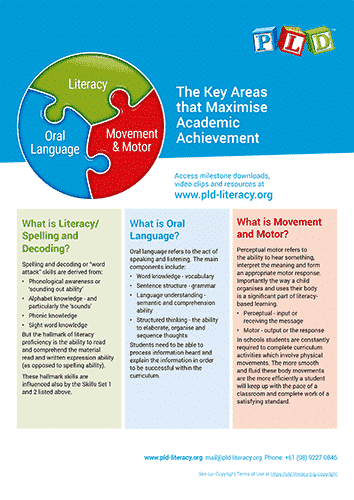
Oral language refers to the act of speaking and listening. The main components for the oral language skill set includes: word knowledge (vocabulary), sentence structure (grammar), language understanding (semantic and comprehension ability) and structured thinking (or the ability to elaborate, organise and sequence thoughts). While poor oral language skills do not prevent children from reading, the long-term impact is concerning. By middle primary school, when both the curriculum and reading material increase in difficulty, a significant number of students will struggle to keep up with the demands of the curriculum if they have poorly developed language skills.
Comprehension
Speaking & Listening
Narrative
Semantics
Downloads
Screening Tools
-
Discounted
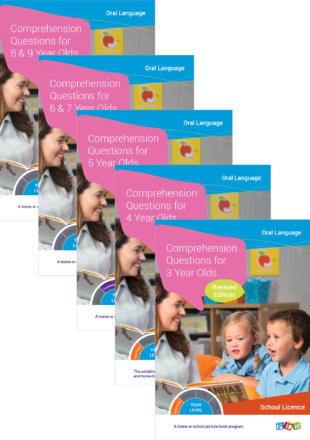
Comprehension Questions for 3 to 9 Year Olds – Full Set
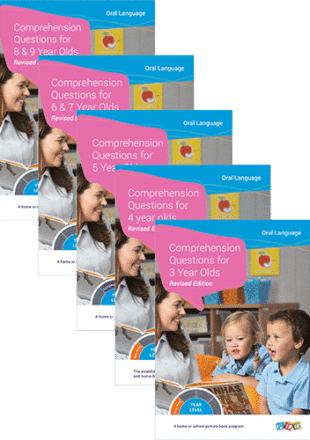
The full set of Reading Comprehension Questions contains five resources for students aged 3 to 9 and aims to develop reading comprehension in Junior and Middle Primary classrooms. Buy all […]
The full set of Reading Comprehension Questions contains five resources for students aged 3 to 9 and aims to develop reading comprehension in Junior and
Original price was: $350.63.$350.63Current price is: $350.63. -
Discounted
Semantics Program for Early Years & Foundation – Full Set
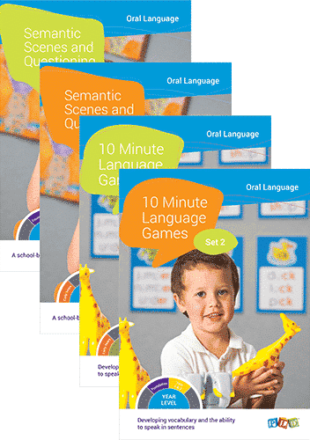
The PLD Semantics program for Early Years & Foundation classrooms has been designed by speech pathologists for students between 3 and 6 years of age. Buy all four resources in […]
The PLD Semantics program for Early Years & Foundation classrooms has been designed by speech pathologists for students between 3 and 6 years of age.
Original price was: $280.50.$280.50Current price is: $280.50. -
Discounted
Ultimate Literacy & Oral Language Early Years PLD Starter Pack
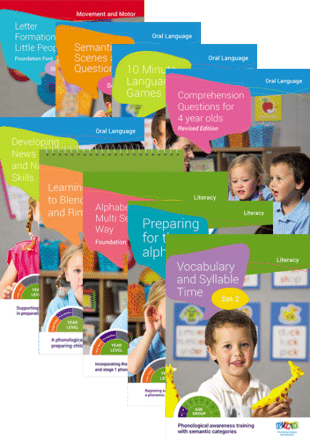
The essential resources you need for Early Years Literacy, Oral Language and Movement and Motor.
The Early Years (Ages 3 & 4) are a significant period in a child’s development and therefore we have compiled the Ultimate Early Years Literacy
Original price was: $611.99.$611.99Current price is: $611.99. -
Discounted
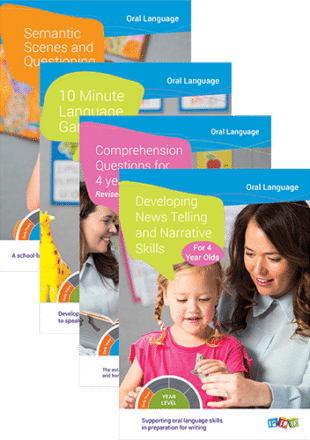
Essential Early Years Oral Language Starter Pack
-
Comprehension Questions for 4 Year Olds - Individual Licence
 This is a PLD Individual Licence resource. By purchasing this licence, this program will be accessible as a digital flipbook that will be stored in your secure account on the PLD website and may only be accessed by an individual user, being the Purchaser. The program will be accessible as a digital flipbook that can be accessed by the purchaser on any device for as long as the licence is active. An Individual Licence is valid for 12 months from the date of purchase. Sharing of an Individual Licence or account credentials for the purpose of sharing an Individual Licence is a breach of Australian Copyright Law and PLD Terms of Use. For more information, visit our Individual Licence FAQ.
A home or school picture book program for 4 Year Old students. The aim of Comprehension Questions for 4 Year olds is to train parents
$41.25 / year -
Preparing Children for Handwriting - Step 1 - Individual Licence
This is a PLD Individual Licence resource. By purchasing this licence, this program will be accessible as a digital flipbook that will be stored in your secure account on the PLD website and may only be accessed by an individual user, being the Purchaser. The program will be accessible as a digital flipbook that can be accessed by the purchaser on any device for as long as the licence is active. An Individual Licence is valid for 12 months from the date of purchase. Sharing of an Individual Licence or account credentials for the purpose of sharing an Individual Licence is a breach of Australian Copyright Law and PLD Terms of Use. For more information, visit our Individual Licence FAQ.The range of motor skills that support handwriting in Early Years students Early childhood education is a critical time for consolidating the fine motor skills
$41.25 / year -
Developing News Telling and Narrative Skills For 4 Year Olds - Individual Licence
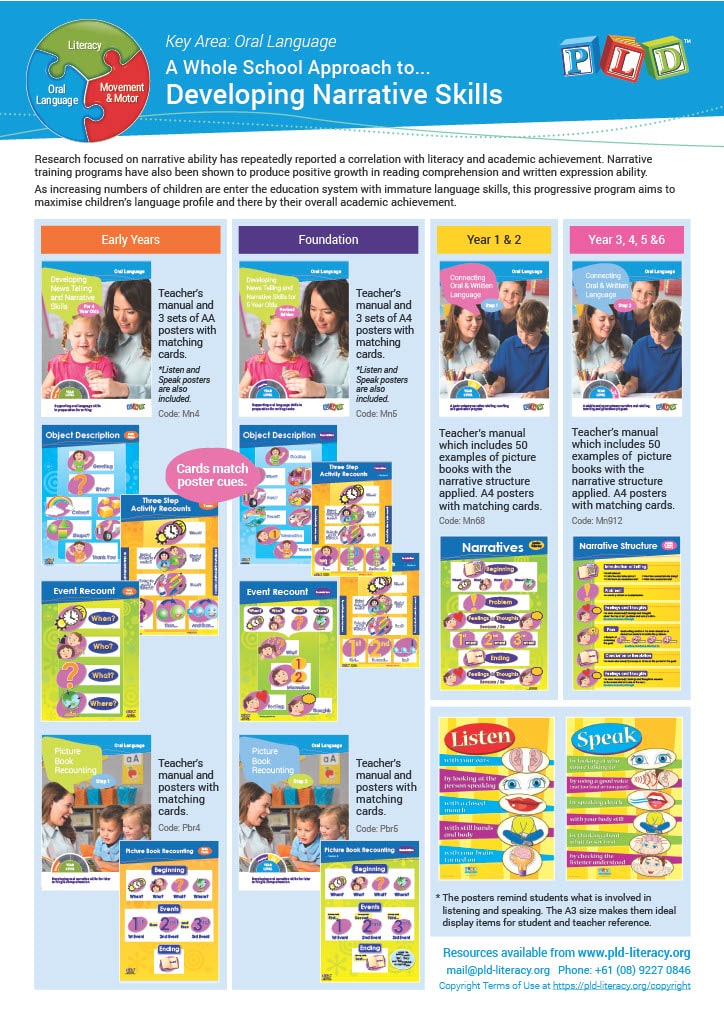
This is a PLD Individual Licence resource. By purchasing this licence, this program will be accessible as a digital flipbook that will be stored in your secure account on the PLD website and may only be accessed by an individual user, being the Purchaser. The program will be accessible as a digital flipbook that can be accessed by the purchaser on any device for as long as the licence is active. An Individual Licence is valid for 12 months from the date of purchase. Sharing of an Individual Licence or account credentials for the purpose of sharing an Individual Licence is a breach of Australian Copyright Law and PLD Terms of Use. For more information, visit our Individual Licence FAQ.Oral language preparation for writing including show and tell, activity retells & news telling. Initially, all four-year-olds will require support with activity retells. However if
$41.25 / year -
Teach a Child to Read in 3 steps - Individual Licence
This is a PLD Individual Licence resource. By purchasing this licence, this program will be accessible as a digital flipbook that will be stored in your secure account on the PLD website and may only be accessed by an individual user, being the Purchaser. The program will be accessible as a digital flipbook that can be accessed by the purchaser on any device for as long as the licence is active. An Individual Licence is valid for 12 months from the date of purchase. Sharing of an Individual Licence or account credentials for the purpose of sharing an Individual Licence is a breach of Australian Copyright Law and PLD Terms of Use. For more information, visit our Individual Licence FAQ.Targeting alphabet sounds, phonemic blending and CVC decoding Single word decoding involves two primary base skills: Visual Skills: The recognition of the alphabet symbol and
$41.25 / year -
Teach a Child to Spell in 3 steps - Individual Licence
This is a PLD Individual Licence resource. By purchasing this licence, this program will be accessible as a digital flipbook that will be stored in your secure account on the PLD website and may only be accessed by an individual user, being the Purchaser. The program will be accessible as a digital flipbook that can be accessed by the purchaser on any device for as long as the licence is active. An Individual Licence is valid for 12 months from the date of purchase. Sharing of an Individual Licence or account credentials for the purpose of sharing an Individual Licence is a breach of Australian Copyright Law and PLD Terms of Use. For more information, visit our Individual Licence FAQ.Targeting alphabet sounds, phonemic segmentation and CVC spelling Single word spelling involves three primary base skills: Visual Skills: The recognition of the alphabet symbol and
$41.25 / year -
Activity Recounts - Individual Licence
This is a PLD Individual Licence resource. By purchasing this licence, this program will be accessible as a digital flipbook that will be stored in your secure account on the PLD website and may only be accessed by an individual user, being the Purchaser. The program will be accessible as a digital flipbook that can be accessed by the purchaser on any device for as long as the licence is active. An Individual Licence is valid for 12 months from the date of purchase. Sharing of an Individual Licence or account credentials for the purpose of sharing an Individual Licence is a breach of Australian Copyright Law and PLD Terms of Use. For more information, visit our Individual Licence FAQ.Introduction to the Program This program is designed to develop early narrative skills in young children by encouraging them to retell simple activities and events.
$41.25 / year -
Comprehension Questions for 3 Year Olds - Individual Licence
This is a PLD Individual Licence resource. By purchasing this licence, this program will be accessible as a digital flipbook that will be stored in your secure account on the PLD website and may only be accessed by an individual user, being the Purchaser. The program will be accessible as a digital flipbook that can be accessed by the purchaser on any device for as long as the licence is active. An Individual Licence is valid for 12 months from the date of purchase. Sharing of an Individual Licence or account credentials for the purpose of sharing an Individual Licence is a breach of Australian Copyright Law and PLD Terms of Use. For more information, visit our Individual Licence FAQ.A home or school picture book program for 3 year olds. From the age of two, children should have a vocabulary of approximately 50
$41.25 / year -
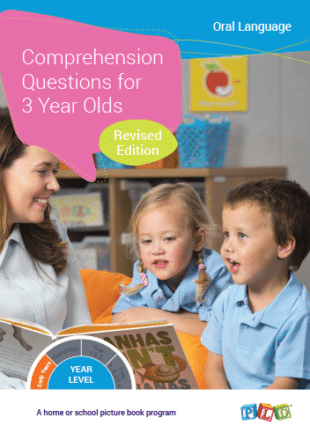
Comprehension Questions for 3 Year Olds
A home or school picture book program for 3 year olds.
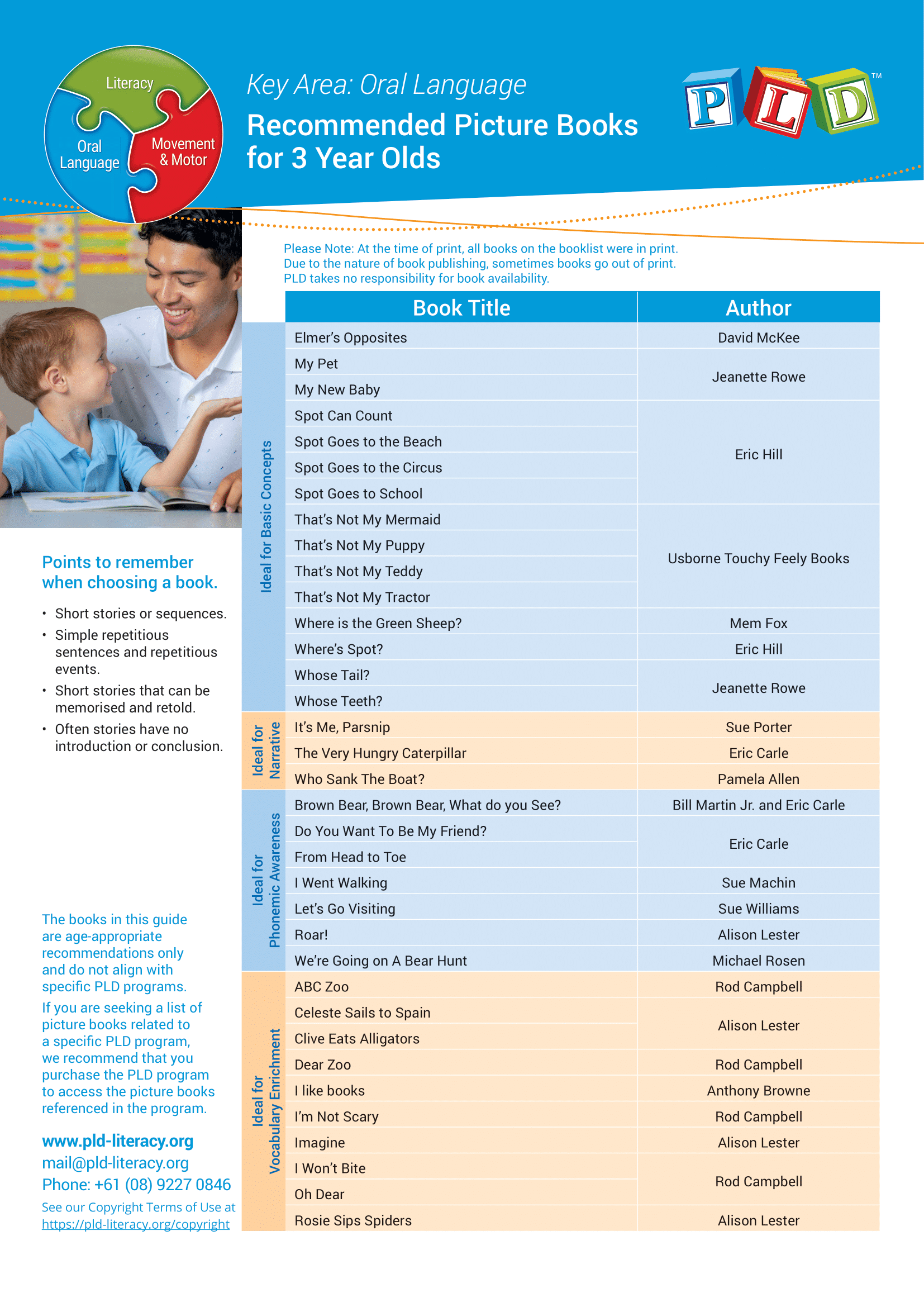
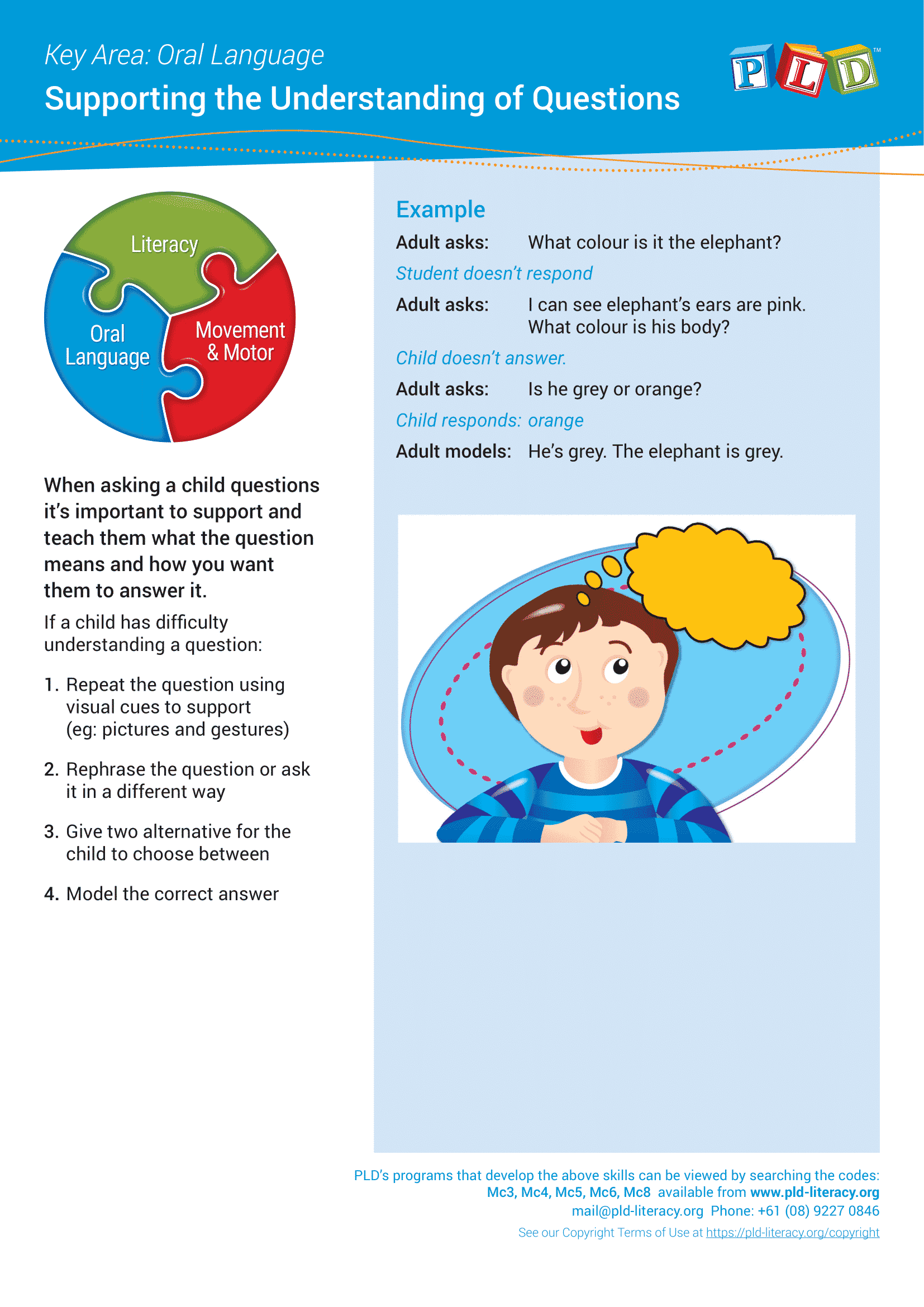
Comprehension Questions for 3 Year Olds is a home or school resource designed to support oral language development in young children. By age 3, children should be verbal, actively engage in social interactions and understand simple, literal questions about their surroundings. This program, developed by speech pathologists, supports the development of these foundational comprehension skills using engaging picture books to ask age-appropriate questions and assess oral responses. Oral language skills are critical for social interaction and academic success. Program Includes: Picture Book Recommendations: List of developmentally appropriate Picture Book recommendations, such as 'Spot Can Count', 'The Very Hungry Caterpillar' and 'We're Going on a Bear Hunt'. 35 Question Cards for Repeated Reading Sessions: Develop blending skills through engaging visuals. Each card contains sample questions (over four days) and model answers based on each recommended picture book. Questions focus on Blank Level 1 and 2 skills, such as 'What is it?' or 'What colour is it?' Instruction Booklet: Guidance for presenting in group, class or home settings. Strategies for Success: Techniques for responding to inadequate answers. Progress Check: Two assessments to monitor comprehension skill development. Other Programs within the Range: Comprehension Questions for 3 Year Old (Mc3) Parent Training Video: 3 Year Olds Comprehension Questions for 4 Year Old (Mc4) Parent Training Video: 4 Year Olds Comprehension Questions for 5 Year Old (Mc5) Parent Training Video: 5 Year Olds Comprehension Questions for 6 and 7 Year Old (Mc6) Parent Training Video: 6 and 7 Year Olds Comprehension Questions for 8 and 9 Year Old (Mc8) Parent Training Video: 8 and 9 Year Olds The full set of Comprehension Questions Range (Mc3/4/5/6/8) Links to the Teaching Sequence Manuals: This product can be used to support the implementation of the Early Years Teaching Sequence Manual on Page 5
$82.50$82.50 incl. GST -
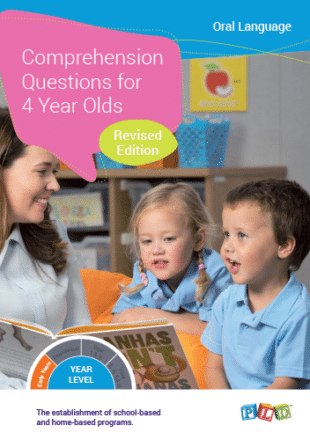
Comprehension Questions for 4 Year Olds
A home or school picture book program for 4 Year Old students.
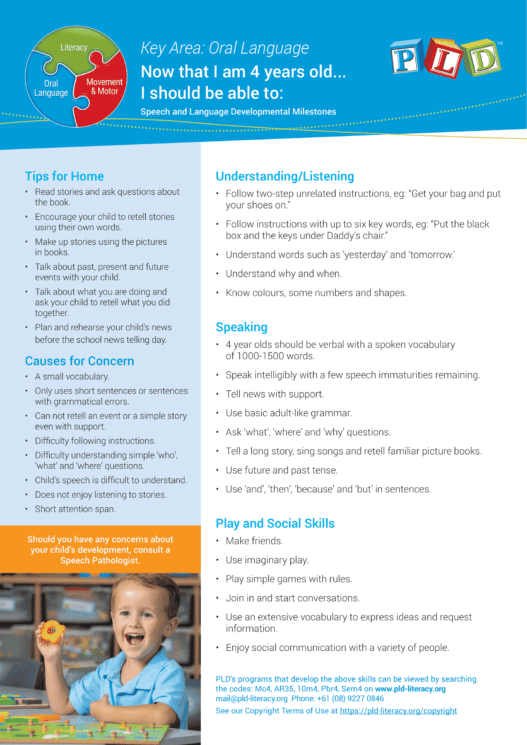
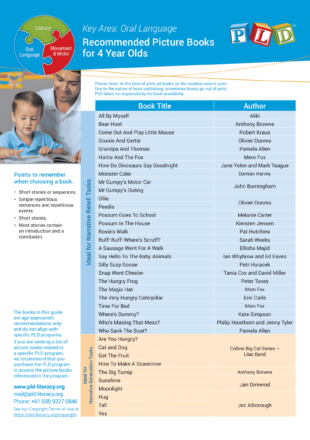
Comprehension Questions for 4 Year Olds is a home or school resource designed to support oral language development in young children. From a young age, children should be verbal, actively engage in social interactions and understand simple, literal questions about their surroundings. By age 4, children begin answering more complex questions, requiring them to identify less obvious attributes, make predictions and sequence information. This program, developed by speech pathologists, supports the development of these foundational comprehension skills using engaging picture books to ask age-appropriate questions and assess oral responses. Oral language skills are critical for social interaction and academic success. Program Includes: Picture Book Recommendations: List of developmentally appropriate Picture Book recommendations, such as 'Piranhas Don't Eat Bananas' and 'We're Going on a Bear Hunt'. 41 Question Cards for Repeated Reading Sessions: Develop blending skills through engaging visuals. Each card contains sample questions (over four days) and model answers based on each recommended picture book. Questions focus on Blank Level 2 and 3 skills, such as 'What is this part used for?' or 'How did you feel?' Instruction Booklet: Guidance for presenting in group, class or home settings. Strategies for Success: Techniques for responding to inadequate answers. Progress Check: Two assessments to monitor comprehension skill development. Other Programs within the Range: Comprehension Questions for 3 Year Old (Mc3) Parent Training Video: 3 Year Olds Comprehension Questions for 4 Year Old (Mc4) Parent Training Video: 4 Year Olds Comprehension Questions for 5 Year Old (Mc5) Parent Training Video: 5 Year Olds Comprehension Questions for 6 and 7 Year Old (Mc6) Parent Training Video: 6 and 7 Year Olds Comprehension Questions for 8 and 9 Year Old (Mc8) Parent Training Video: 8 and 9 Year Olds The full set of Comprehension Questions Range (Mc3/4/5/6/8) Links to the Teaching Sequence Manuals: This product can be used to support the implementation of the Early Years Teaching Sequence Manual on Page 5
$82.50$82.50 incl. GST




-
Discounted
Comprehension Questions for 3 to 9 Year Olds – Full Set
The full set of Reading Comprehension Questions contains five resources for students aged 3 to 9 and aims to develop reading comprehension in Junior and Middle Primary classrooms. Buy all […]
The full set of Reading Comprehension Questions contains five resources for students aged 3 to 9 and aims to develop reading comprehension in Junior and
Original price was: $350.63.$350.63Current price is: $350.63. -
Discounted
Semantics Program for Early Years & Foundation – Full Set
The PLD Semantics program for Early Years & Foundation classrooms has been designed by speech pathologists for students between 3 and 6 years of age. Buy all four resources in […]
The PLD Semantics program for Early Years & Foundation classrooms has been designed by speech pathologists for students between 3 and 6 years of age.
Original price was: $280.50.$280.50Current price is: $280.50. -
Discounted
Ultimate Literacy & Oral Language Foundation PLD Starter Pack
A complete suite of resources for the Foundation Year including Oral Language, Literacy and Movement and Motor.
This Ultimate Foundation Literacy & Oral Language Starter Pack contains all of PLD’s essential resources for teaching literacy and oral language skills to students aged
Original price was: $908.22.$908.22Current price is: $908.22. -
Discounted
Essential Foundation Oral Language Starter Pack
Oral language bundle of resources for news telling, oral comprehension, semantics and language games.
The Essential Foundation Oral Language Starter Pack contains the essential resources to teach 5 and 6-year-old students in your classroom. In the Foundation Year, students
Original price was: $280.50.$280.50Current price is: $280.50. -
Comprehension Questions for 5 Year Olds - Individual Licence
This is a PLD Individual Licence resource. By purchasing this licence, this program will be accessible as a digital flipbook that will be stored in your secure account on the PLD website and may only be accessed by an individual user, being the Purchaser. The program will be accessible as a digital flipbook that can be accessed by the purchaser on any device for as long as the licence is active. An Individual Licence is valid for 12 months from the date of purchase. Sharing of an Individual Licence or account credentials for the purpose of sharing an Individual Licence is a breach of Australian Copyright Law and PLD Terms of Use. For more information, visit our Individual Licence FAQ.A home or school picture book program for 5-year-old students. The aim of Comprehension Questions for 5-Year-Olds is to train parents and teachers to ask developmentally appropriate
$41.25 / year -
Integrated SSP Kit - Year 4 Digital Resources (Subscription)
This is a PLD Individual Licence resource. By purchasing this licence, this program will be accessible as a digital flipbook that will be stored in your secure account on the PLD website and may only be accessed by an individual user, being the Purchaser. The program will be accessible as a digital flipbook that can be accessed by the purchaser on any device for as long as the licence is active. An Individual Licence is valid for 12 months from the date of purchase. Sharing of an Individual Licence or account credentials for the purpose of sharing an Individual Licence is a breach of Australian Copyright Law and PLD Terms of Use. For more information, visit our Individual Licence FAQ.Please note: If your school has purchased a Starter Pack, an upgrade is available for the Integrated SSP Kit for Foundation at a discounted rate
$49.50 / year with a 12-month free trial -
Integrated SSP Kit - Year 3 Digital Resources (Subscription)
This is a PLD Individual Licence resource. By purchasing this licence, this program will be accessible as a digital flipbook that will be stored in your secure account on the PLD website and may only be accessed by an individual user, being the Purchaser. The program will be accessible as a digital flipbook that can be accessed by the purchaser on any device for as long as the licence is active. An Individual Licence is valid for 12 months from the date of purchase. Sharing of an Individual Licence or account credentials for the purpose of sharing an Individual Licence is a breach of Australian Copyright Law and PLD Terms of Use. For more information, visit our Individual Licence FAQ.Please note: If your school has purchased a Starter Pack, an upgrade is available for the Integrated SSP Kit for Foundation at a discounted rate
$49.50 / year with a 12-month free trial -
Integrated SSP Kit - Year 5 Digital Resources (Subscription)
This is a PLD Individual Licence resource. By purchasing this licence, this program will be accessible as a digital flipbook that will be stored in your secure account on the PLD website and may only be accessed by an individual user, being the Purchaser. The program will be accessible as a digital flipbook that can be accessed by the purchaser on any device for as long as the licence is active. An Individual Licence is valid for 12 months from the date of purchase. Sharing of an Individual Licence or account credentials for the purpose of sharing an Individual Licence is a breach of Australian Copyright Law and PLD Terms of Use. For more information, visit our Individual Licence FAQ.Please note: If your school has purchased a Starter Pack, an upgrade is available for the Integrated SSP Kit for Foundation at a discounted rate
$49.50 / year with a 12-month free trial -
Integrated SSP Kit - Year 2 Digital Resource (Subscription)
This is a PLD Individual Licence resource. By purchasing this licence, this program will be accessible as a digital flipbook that will be stored in your secure account on the PLD website and may only be accessed by an individual user, being the Purchaser. The program will be accessible as a digital flipbook that can be accessed by the purchaser on any device for as long as the licence is active. An Individual Licence is valid for 12 months from the date of purchase. Sharing of an Individual Licence or account credentials for the purpose of sharing an Individual Licence is a breach of Australian Copyright Law and PLD Terms of Use. For more information, visit our Individual Licence FAQ.Please note: If your school has purchased a Starter Pack, an upgrade is available for the Integrated SSP Kit for Foundation at a discounted rate
$49.50 / year with a 12-month free trial -
Integrated SSP Kit - Year 1 - Digital Resources (Subscription)
This is a PLD Individual Licence resource. By purchasing this licence, this program will be accessible as a digital flipbook that will be stored in your secure account on the PLD website and may only be accessed by an individual user, being the Purchaser. The program will be accessible as a digital flipbook that can be accessed by the purchaser on any device for as long as the licence is active. An Individual Licence is valid for 12 months from the date of purchase. Sharing of an Individual Licence or account credentials for the purpose of sharing an Individual Licence is a breach of Australian Copyright Law and PLD Terms of Use. For more information, visit our Individual Licence FAQ.Please note: If your school has purchased a Starter Pack, an upgrade is available for the Integrated SSP Kit for Foundation at a discounted rate
$49.50 / year with a 12-month free trial -
Integrated SSP Kit for Foundation
Integrated SSP Kits include 12 months of access (for a single class and teacher) to the digital components of the Kit. After this initial period, a standard annual fee ($49.50 […]
Integrated SSP Kits include 12 months of access (for a single class and teacher) to the digital components of the Kit. After this initial period,
$825.00 -
Comprehension Questions for 5 Year Olds
Picture Book Program for 5 Year Olds: Perfect for Home or School
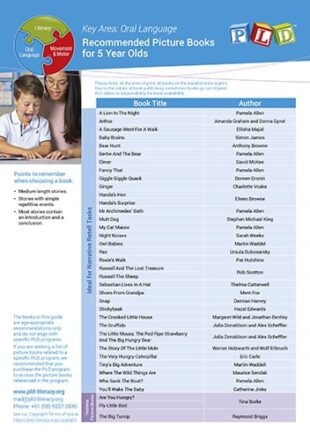
Comprehension Questions for 5 Year Olds is a home or school resource designed to support oral language development in young children. From a young age, children should be verbal, actively engage in social interactions and understand simple, literal questions about their surroundings. By age 5, children begin answering more complex questions that involve predicting, explaining outcomes and considering alternative possibilities. This program, developed by speech pathologists, supports the development of these foundational comprehension skills using engaging picture books to ask age-appropriate questions and assess oral responses. Oral language skills are critical for social interaction and academic success. Program Includes: Picture Book Recommendations: List of developmentally appropriate Picture Book recommendations, such as 'A Lion in the Night', 'The Gruffalo' and 'The Very Hungry Caterpillar'. 42 Question Cards for Repeated Reading Sessions: Each card contains sample questions (over four days) and model answers based on each recommended picture book. Questions focus on Blank Level 3 and 4 skills, such as 'Why did that happen?', 'What would you use?' or 'Why can't we?' Instruction Booklet: Guidance for presenting in group, class or home settings. Strategies for Success: Techniques for responding to inadequate answers. Progress Check: Two assessments to monitor comprehension skill development. Other Programs within the Range: Comprehension Questions for 3 Year Old (Mc3) Parent Training Video: 3 Year Olds Comprehension Questions for 4 Year Old (Mc4) Parent Training Video: 4 Year Olds Comprehension Questions for 5 Year Old (Mc5) Parent Training Video: 5 Year Olds Comprehension Questions for 6 and 7 Year Old (Mc6) Parent Training Video: 6 and 7 Year Olds Comprehension Questions for 8 and 9 Year Old (Mc8) Parent Training Video: 8 and 9 Year Olds The full set of Comprehension Questions Range (Mc3/4/5/6/8) Links to the Teaching Sequence Manuals: This product can be used to support the implementation of the Foundation Teaching Sequence Manual on Page 14
$82.50$82.50 incl. GST



-
Discounted
Comprehension Questions for 3 to 9 Year Olds – Full Set
The full set of Reading Comprehension Questions contains five resources for students aged 3 to 9 and aims to develop reading comprehension in Junior and Middle Primary classrooms. Buy all […]
The full set of Reading Comprehension Questions contains five resources for students aged 3 to 9 and aims to develop reading comprehension in Junior and
Original price was: $350.63.$350.63Current price is: $350.63. -
Discounted
Essential Year 1 & 2 Oral Language Starter Pack
-
Discounted
Ultimate Literacy & Oral Language Year 1 Starter Pack
Key Literacy resources for Year 1 teachers including spelling, dictation, phonics, high frequency words, Oral Language and more
Literacy Targets By the end of Year 1, students should have progressed from decodable reading books and be able to accurately and fluently read and spell Stage
Original price was: $624.75.$624.75Current price is: $624.75. -
Discounted
Ultimate Literacy & Oral Language Year 2 Starter Pack
Key Literacy resources for Year 2 teachers including spelling, dictation, phonics, high frequency words, Oral Language and more
Literacy Targets By the end of Year 2, students should have progressed enough to accurately and fluently read and spell Stage 2 words and a
Original price was: $631.13.$631.13Current price is: $631.13. -
Comprehension Questions for 6 and 7 Year Olds - Individual Licence
This is a PLD Individual Licence resource. By purchasing this licence, this program will be accessible as a digital flipbook that will be stored in your secure account on the PLD website and may only be accessed by an individual user, being the Purchaser. The program will be accessible as a digital flipbook that can be accessed by the purchaser on any device for as long as the licence is active. An Individual Licence is valid for 12 months from the date of purchase. Sharing of an Individual Licence or account credentials for the purpose of sharing an Individual Licence is a breach of Australian Copyright Law and PLD Terms of Use. For more information, visit our Individual Licence FAQ.A home or school picture book program for 6 and 7 year olds. The aim of Comprehension Questions for 6 & 7 Year Olds is
$41.25 / year -
Integrated SSP Support Kit
Integrated SSP Kits include 12 months of access (for a single class and teacher) to the digital components of the Kit. After this initial period, a standard annual fee ($49.50 […]
Integrated SSP Kits include 12 months of access (for a single class and teacher) to the digital components of the Kit. After this initial period,
$975.00 -
Integrated SSP Kit for Year 2
Integrated SSP Kits include 12 months of access (for a single class and teacher) to the digital components of the Kit. After this initial period, a standard annual fee ($49.50 […]
Integrated SSP Kits include 12 months of access (for a single class and teacher) to the digital components of the Kit. After this initial period,
$825.00 -
Integrated SSP Kit for Year 1
Integrated SSP Kits include 12 months of access (for a single class and teacher) to the digital components of the Kit. After this initial period, a standard annual fee ($49.50 […]
Integrated SSP Kits include 12 months of access (for a single class and teacher) to the digital components of the Kit. After this initial period,
$825.00 -
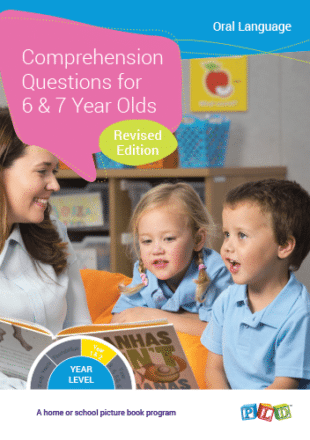
Comprehension Questions for 6 and 7 Year Olds
Picture Book Program for 6 & 7 Year Olds: Perfect for Home or School
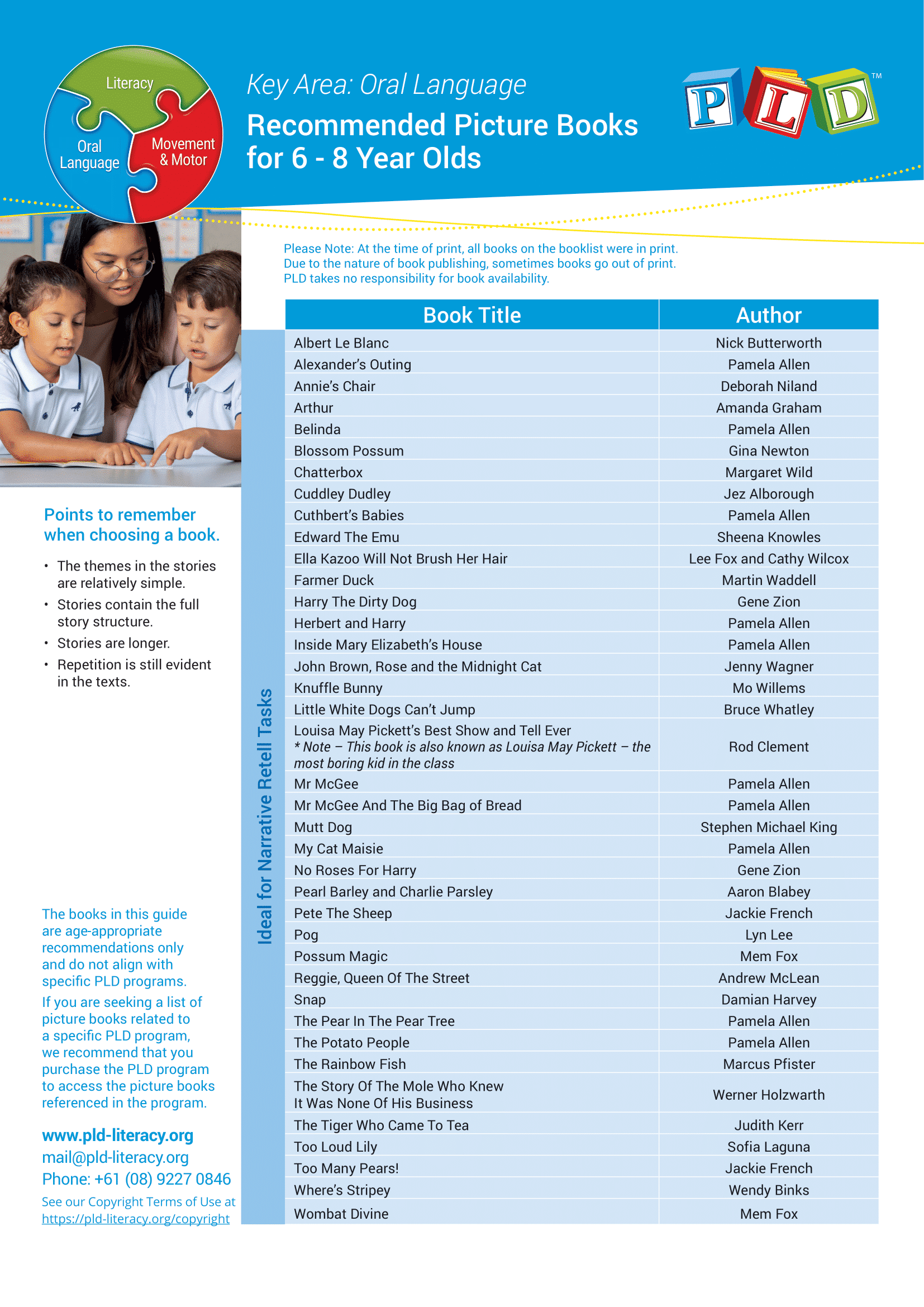
Comprehension Questions for 6 and 7 Year Olds is a home or school resource designed to support oral language development in young children. From a young age, children should be verbal, actively engage in social interactions and understand simple, literal questions about their surroundings. By age 6 and 7, children begin answering more complex questions requiring prediction, interpretation and evaluation. This program, developed by speech pathologists, supports the development of these foundational comprehension skills using engaging picture books to ask age-appropriate questions and assess oral responses. Oral language skills are critical for social interaction and academic success. Program Includes: Picture Book Recommendations: List of developmentally appropriate Picture Book recommendations, such as 'Arthur', 'The Rainbow Fish' and 'Possum Magic'. 40 Question Cards for Repeated Reading Sessions: Develop blending skills through engaging visuals. Each card contains sample questions (over four days) and model answers based on each recommended picture book. Questions are focused on encouraging students to predict, to interpret and to evaluate, such as 'What would happen if…?', 'How can we tell…?' or 'Which part of the story…?' Instruction Booklet: Guidance for presenting in group, class or home settings. Strategies for Success: Techniques for responding to inadequate answers. Progress Check: Two assessments to monitor comprehension skill development. Other Programs within the Range: Comprehension Questions for 3 Year Old (Mc3) Parent Training Video: 3 Year Olds Comprehension Questions for 4 Year Old (Mc4) Parent Training Video: 4 Year Olds Comprehension Questions for 5 Year Old (Mc5) Parent Training Video: 5 Year Olds Comprehension Questions for 6 and 7 Year Old (Mc6) Parent Training Video: 6 and 7 Year Olds Comprehension Questions for 8 and 9 Year Old (Mc8) Parent Training Video: 8 and 9 Year Olds The full set of Comprehension Questions Range (Mc3/4/5/6/8) Links to the Teaching Sequence Manuals: This product can be used to support the implementation of the Year 1 and 2 Teaching Sequence Manual on Page 27
$82.50$82.50 incl. GST


-
Discounted
Comprehension Questions for 3 to 9 Year Olds – Full Set
The full set of Reading Comprehension Questions contains five resources for students aged 3 to 9 and aims to develop reading comprehension in Junior and Middle Primary classrooms. Buy all […]
The full set of Reading Comprehension Questions contains five resources for students aged 3 to 9 and aims to develop reading comprehension in Junior and
Original price was: $350.63.$350.63Current price is: $350.63. -
Discounted
Essential Year 3, 4, 5 & 6 Oral Language Starter Pack
-
Comprehension Questions for 8 and 9 Year Olds - Individual Licence
This is a PLD Individual Licence resource. By purchasing this licence, this program will be accessible as a digital flipbook that will be stored in your secure account on the PLD website and may only be accessed by an individual user, being the Purchaser. The program will be accessible as a digital flipbook that can be accessed by the purchaser on any device for as long as the licence is active. An Individual Licence is valid for 12 months from the date of purchase. Sharing of an Individual Licence or account credentials for the purpose of sharing an Individual Licence is a breach of Australian Copyright Law and PLD Terms of Use. For more information, visit our Individual Licence FAQ.A home or school picture book program for middle primary students. The aim of Comprehension Questions for 8 & 9 Year Olds is to train
$41.25 / year -
Integrated SSP Support Kit
Integrated SSP Kits include 12 months of access (for a single class and teacher) to the digital components of the Kit. After this initial period, a standard annual fee ($49.50 […]
Integrated SSP Kits include 12 months of access (for a single class and teacher) to the digital components of the Kit. After this initial period,
$975.00 -
Integrated SSP Kit for Year 4
Integrated SSP Kits include 12 months of access (for a single class and teacher) to the digital components of the Kit. After this initial period, a standard annual fee ($49.50 […]
Integrated SSP Kits include 12 months of access (for a single class and teacher) to the digital components of the Kit. After this initial period,
$825.00 -
Integrated SSP Kit for Year 3
Integrated SSP Kits include 12 months of access (for a single class and teacher) to the digital components of the Kit. After this initial period, a standard annual fee ($49.50 […]
Integrated SSP Kits include 12 months of access (for a single class and teacher) to the digital components of the Kit. After this initial period,
$825.00 -
Integrated SSP Kit for Year 5
Integrated SSP Kits include 12 months of access (for a single class and teacher) to the digital components of the Kit. After this initial period, a standard annual fee ($49.50 […]
Integrated SSP Kits include 12 months of access (for a single class and teacher) to the digital components of the Kit. After this initial period,
$825.00 -
Integrated SSP Kit for Year 6
Integrated SSP Kits include 12 months of access (for a single class and teacher) to the digital components of the Kit. After this initial period, a standard annual fee ($49.50 […]
Integrated SSP Kits include 12 months of access (for a single class and teacher) to the digital components of the Kit. After this initial period,
$825.00 -
Comprehension Questions for 8 and 9 Year Olds
Picture Book Program for 8 & 9 Year Olds: Perfect for Home or School
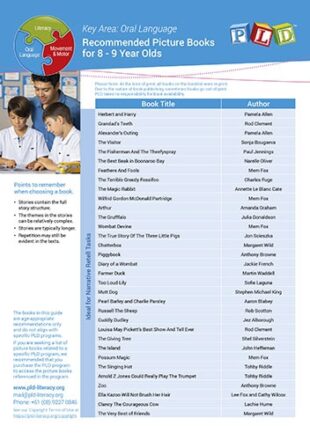
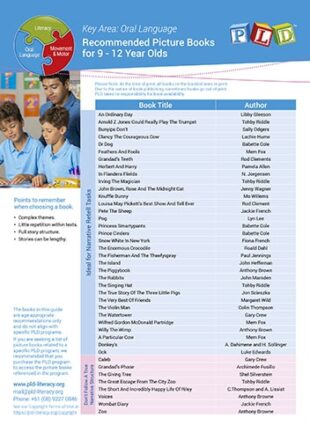
Comprehension Questions for 8 & 9 Year Olds is a home or school resource designed to support oral language development in young children. From a young age, children should be verbal, actively engage in social interactions and understand simple, literal questions about their surroundings. By age 8 and 9, children further develop their focus on answering complex questions requiring prediction, interpretation and evaluation. This program, developed by speech pathologists, supports the development of these foundational comprehension skills using engaging picture books to ask age-appropriate questions and assess oral responses. Oral language skills are critical for social interaction and academic success. Program Includes: Picture Book Recommendations: List of developmentally appropriate Picture Book recommendations, such as 'The Gruffalo', 'The Giving Tree' and 'Diary of a Womat'. 33 Question Cards for Repeated Reading Sessions: Each card contains sample questions (over four days) and model answers based on each recommended picture book. Questions are focused on encouraging students to predict, to interpret and to evaluate, such as 'Why do you think…?' 'How do you think the girl would feel?' or 'Why do you like that one best?' Instruction Booklet: Guidance for presenting in group, class or home settings. Strategies for Success: Techniques for responding to inadequate answers. Progress Check: Two assessments to monitor comprehension skill development. Other Programs within the Range: Comprehension Questions for 3 Year Old (Mc3) Parent Training Video: 3 Year Olds Comprehension Questions for 4 Year Old (Mc4) Parent Training Video: 4 Year Olds Comprehension Questions for 5 Year Old (Mc5) Parent Training Video: 5 Year Olds Comprehension Questions for 6 and 7 Year Old (Mc6) Parent Training Video: 6 and 7 Year Olds Comprehension Questions for 8 and 9 Year Old (Mc8) Parent Training Video: 8 and 9 Year Olds The full set of Comprehension Questions Range (Mc3/4/5/6/8) Links to the Teaching Sequence Manuals: This product can be used to support the implementation of the Year 3, 4, 5 & 6 Teaching Sequence Manual on Page 30
$82.50$82.50 incl. GST



-
Comprehension Questions for 3 Year Olds
A home or school picture book program for 3 year olds.
Comprehension Questions for 3 Year Olds is a home or school resource designed to support oral language development in young children. By age 3, children should be verbal, actively engage in social interactions and understand simple, literal questions about their surroundings. This program, developed by speech pathologists, supports the development of these foundational comprehension skills using engaging picture books to ask age-appropriate questions and assess oral responses. Oral language skills are critical for social interaction and academic success. Program Includes: Picture Book Recommendations: List of developmentally appropriate Picture Book recommendations, such as 'Spot Can Count', 'The Very Hungry Caterpillar' and 'We're Going on a Bear Hunt'. 35 Question Cards for Repeated Reading Sessions: Develop blending skills through engaging visuals. Each card contains sample questions (over four days) and model answers based on each recommended picture book. Questions focus on Blank Level 1 and 2 skills, such as 'What is it?' or 'What colour is it?' Instruction Booklet: Guidance for presenting in group, class or home settings. Strategies for Success: Techniques for responding to inadequate answers. Progress Check: Two assessments to monitor comprehension skill development. Other Programs within the Range: Comprehension Questions for 3 Year Old (Mc3) Parent Training Video: 3 Year Olds Comprehension Questions for 4 Year Old (Mc4) Parent Training Video: 4 Year Olds Comprehension Questions for 5 Year Old (Mc5) Parent Training Video: 5 Year Olds Comprehension Questions for 6 and 7 Year Old (Mc6) Parent Training Video: 6 and 7 Year Olds Comprehension Questions for 8 and 9 Year Old (Mc8) Parent Training Video: 8 and 9 Year Olds The full set of Comprehension Questions Range (Mc3/4/5/6/8) Links to the Teaching Sequence Manuals: This product can be used to support the implementation of the Early Years Teaching Sequence Manual on Page 5
$82.50$82.50 incl. GST -
Comprehension Questions for 4 Year Olds
A home or school picture book program for 4 Year Old students.
Comprehension Questions for 4 Year Olds is a home or school resource designed to support oral language development in young children. From a young age, children should be verbal, actively engage in social interactions and understand simple, literal questions about their surroundings. By age 4, children begin answering more complex questions, requiring them to identify less obvious attributes, make predictions and sequence information. This program, developed by speech pathologists, supports the development of these foundational comprehension skills using engaging picture books to ask age-appropriate questions and assess oral responses. Oral language skills are critical for social interaction and academic success. Program Includes: Picture Book Recommendations: List of developmentally appropriate Picture Book recommendations, such as 'Piranhas Don't Eat Bananas' and 'We're Going on a Bear Hunt'. 41 Question Cards for Repeated Reading Sessions: Develop blending skills through engaging visuals. Each card contains sample questions (over four days) and model answers based on each recommended picture book. Questions focus on Blank Level 2 and 3 skills, such as 'What is this part used for?' or 'How did you feel?' Instruction Booklet: Guidance for presenting in group, class or home settings. Strategies for Success: Techniques for responding to inadequate answers. Progress Check: Two assessments to monitor comprehension skill development. Other Programs within the Range: Comprehension Questions for 3 Year Old (Mc3) Parent Training Video: 3 Year Olds Comprehension Questions for 4 Year Old (Mc4) Parent Training Video: 4 Year Olds Comprehension Questions for 5 Year Old (Mc5) Parent Training Video: 5 Year Olds Comprehension Questions for 6 and 7 Year Old (Mc6) Parent Training Video: 6 and 7 Year Olds Comprehension Questions for 8 and 9 Year Old (Mc8) Parent Training Video: 8 and 9 Year Olds The full set of Comprehension Questions Range (Mc3/4/5/6/8) Links to the Teaching Sequence Manuals: This product can be used to support the implementation of the Early Years Teaching Sequence Manual on Page 5
$82.50$82.50 incl. GST -
Comprehension Questions for 5 Year Olds
Picture Book Program for 5 Year Olds: Perfect for Home or School
Comprehension Questions for 5 Year Olds is a home or school resource designed to support oral language development in young children. From a young age, children should be verbal, actively engage in social interactions and understand simple, literal questions about their surroundings. By age 5, children begin answering more complex questions that involve predicting, explaining outcomes and considering alternative possibilities. This program, developed by speech pathologists, supports the development of these foundational comprehension skills using engaging picture books to ask age-appropriate questions and assess oral responses. Oral language skills are critical for social interaction and academic success. Program Includes: Picture Book Recommendations: List of developmentally appropriate Picture Book recommendations, such as 'A Lion in the Night', 'The Gruffalo' and 'The Very Hungry Caterpillar'. 42 Question Cards for Repeated Reading Sessions: Each card contains sample questions (over four days) and model answers based on each recommended picture book. Questions focus on Blank Level 3 and 4 skills, such as 'Why did that happen?', 'What would you use?' or 'Why can't we?' Instruction Booklet: Guidance for presenting in group, class or home settings. Strategies for Success: Techniques for responding to inadequate answers. Progress Check: Two assessments to monitor comprehension skill development. Other Programs within the Range: Comprehension Questions for 3 Year Old (Mc3) Parent Training Video: 3 Year Olds Comprehension Questions for 4 Year Old (Mc4) Parent Training Video: 4 Year Olds Comprehension Questions for 5 Year Old (Mc5) Parent Training Video: 5 Year Olds Comprehension Questions for 6 and 7 Year Old (Mc6) Parent Training Video: 6 and 7 Year Olds Comprehension Questions for 8 and 9 Year Old (Mc8) Parent Training Video: 8 and 9 Year Olds The full set of Comprehension Questions Range (Mc3/4/5/6/8) Links to the Teaching Sequence Manuals: This product can be used to support the implementation of the Foundation Teaching Sequence Manual on Page 14
$82.50$82.50 incl. GST -
Comprehension Questions for 6 and 7 Year Olds
Picture Book Program for 6 & 7 Year Olds: Perfect for Home or School
Comprehension Questions for 6 and 7 Year Olds is a home or school resource designed to support oral language development in young children. From a young age, children should be verbal, actively engage in social interactions and understand simple, literal questions about their surroundings. By age 6 and 7, children begin answering more complex questions requiring prediction, interpretation and evaluation. This program, developed by speech pathologists, supports the development of these foundational comprehension skills using engaging picture books to ask age-appropriate questions and assess oral responses. Oral language skills are critical for social interaction and academic success. Program Includes: Picture Book Recommendations: List of developmentally appropriate Picture Book recommendations, such as 'Arthur', 'The Rainbow Fish' and 'Possum Magic'. 40 Question Cards for Repeated Reading Sessions: Develop blending skills through engaging visuals. Each card contains sample questions (over four days) and model answers based on each recommended picture book. Questions are focused on encouraging students to predict, to interpret and to evaluate, such as 'What would happen if…?', 'How can we tell…?' or 'Which part of the story…?' Instruction Booklet: Guidance for presenting in group, class or home settings. Strategies for Success: Techniques for responding to inadequate answers. Progress Check: Two assessments to monitor comprehension skill development. Other Programs within the Range: Comprehension Questions for 3 Year Old (Mc3) Parent Training Video: 3 Year Olds Comprehension Questions for 4 Year Old (Mc4) Parent Training Video: 4 Year Olds Comprehension Questions for 5 Year Old (Mc5) Parent Training Video: 5 Year Olds Comprehension Questions for 6 and 7 Year Old (Mc6) Parent Training Video: 6 and 7 Year Olds Comprehension Questions for 8 and 9 Year Old (Mc8) Parent Training Video: 8 and 9 Year Olds The full set of Comprehension Questions Range (Mc3/4/5/6/8) Links to the Teaching Sequence Manuals: This product can be used to support the implementation of the Year 1 and 2 Teaching Sequence Manual on Page 27
$82.50$82.50 incl. GST -
Comprehension Questions for 8 and 9 Year Olds
Picture Book Program for 8 & 9 Year Olds: Perfect for Home or School
Comprehension Questions for 8 & 9 Year Olds is a home or school resource designed to support oral language development in young children. From a young age, children should be verbal, actively engage in social interactions and understand simple, literal questions about their surroundings. By age 8 and 9, children further develop their focus on answering complex questions requiring prediction, interpretation and evaluation. This program, developed by speech pathologists, supports the development of these foundational comprehension skills using engaging picture books to ask age-appropriate questions and assess oral responses. Oral language skills are critical for social interaction and academic success. Program Includes: Picture Book Recommendations: List of developmentally appropriate Picture Book recommendations, such as 'The Gruffalo', 'The Giving Tree' and 'Diary of a Womat'. 33 Question Cards for Repeated Reading Sessions: Each card contains sample questions (over four days) and model answers based on each recommended picture book. Questions are focused on encouraging students to predict, to interpret and to evaluate, such as 'Why do you think…?' 'How do you think the girl would feel?' or 'Why do you like that one best?' Instruction Booklet: Guidance for presenting in group, class or home settings. Strategies for Success: Techniques for responding to inadequate answers. Progress Check: Two assessments to monitor comprehension skill development. Other Programs within the Range: Comprehension Questions for 3 Year Old (Mc3) Parent Training Video: 3 Year Olds Comprehension Questions for 4 Year Old (Mc4) Parent Training Video: 4 Year Olds Comprehension Questions for 5 Year Old (Mc5) Parent Training Video: 5 Year Olds Comprehension Questions for 6 and 7 Year Old (Mc6) Parent Training Video: 6 and 7 Year Olds Comprehension Questions for 8 and 9 Year Old (Mc8) Parent Training Video: 8 and 9 Year Olds The full set of Comprehension Questions Range (Mc3/4/5/6/8) Links to the Teaching Sequence Manuals: This product can be used to support the implementation of the Year 3, 4, 5 & 6 Teaching Sequence Manual on Page 30
$82.50$82.50 incl. GST
-
Comprehension Questions for 8 and 9 Year Olds - Individual Licence
This is a PLD Individual Licence resource. By purchasing this licence, this program will be accessible as a digital flipbook that will be stored in your secure account on the PLD website and may only be accessed by an individual user, being the Purchaser. The program will be accessible as a digital flipbook that can be accessed by the purchaser on any device for as long as the licence is active. An Individual Licence is valid for 12 months from the date of purchase. Sharing of an Individual Licence or account credentials for the purpose of sharing an Individual Licence is a breach of Australian Copyright Law and PLD Terms of Use. For more information, visit our Individual Licence FAQ.A home or school picture book program for middle primary students. The aim of Comprehension Questions for 8 & 9 Year Olds is to train
$41.25 / year -
Comprehension Questions for 6 and 7 Year Olds - Individual Licence
This is a PLD Individual Licence resource. By purchasing this licence, this program will be accessible as a digital flipbook that will be stored in your secure account on the PLD website and may only be accessed by an individual user, being the Purchaser. The program will be accessible as a digital flipbook that can be accessed by the purchaser on any device for as long as the licence is active. An Individual Licence is valid for 12 months from the date of purchase. Sharing of an Individual Licence or account credentials for the purpose of sharing an Individual Licence is a breach of Australian Copyright Law and PLD Terms of Use. For more information, visit our Individual Licence FAQ.A home or school picture book program for 6 and 7 year olds. The aim of Comprehension Questions for 6 & 7 Year Olds is
$41.25 / year -
Comprehension Questions for 5 Year Olds - Individual Licence
This is a PLD Individual Licence resource. By purchasing this licence, this program will be accessible as a digital flipbook that will be stored in your secure account on the PLD website and may only be accessed by an individual user, being the Purchaser. The program will be accessible as a digital flipbook that can be accessed by the purchaser on any device for as long as the licence is active. An Individual Licence is valid for 12 months from the date of purchase. Sharing of an Individual Licence or account credentials for the purpose of sharing an Individual Licence is a breach of Australian Copyright Law and PLD Terms of Use. For more information, visit our Individual Licence FAQ.A home or school picture book program for 5-year-old students. The aim of Comprehension Questions for 5-Year-Olds is to train parents and teachers to ask developmentally appropriate
$41.25 / year -
Comprehension Questions for 4 Year Olds - Individual Licence
This is a PLD Individual Licence resource. By purchasing this licence, this program will be accessible as a digital flipbook that will be stored in your secure account on the PLD website and may only be accessed by an individual user, being the Purchaser. The program will be accessible as a digital flipbook that can be accessed by the purchaser on any device for as long as the licence is active. An Individual Licence is valid for 12 months from the date of purchase. Sharing of an Individual Licence or account credentials for the purpose of sharing an Individual Licence is a breach of Australian Copyright Law and PLD Terms of Use. For more information, visit our Individual Licence FAQ.A home or school picture book program for 4 Year Old students. The aim of Comprehension Questions for 4 Year olds is to train parents
$41.25 / year -
Preparing Children for Handwriting - Step 1 - Individual Licence
This is a PLD Individual Licence resource. By purchasing this licence, this program will be accessible as a digital flipbook that will be stored in your secure account on the PLD website and may only be accessed by an individual user, being the Purchaser. The program will be accessible as a digital flipbook that can be accessed by the purchaser on any device for as long as the licence is active. An Individual Licence is valid for 12 months from the date of purchase. Sharing of an Individual Licence or account credentials for the purpose of sharing an Individual Licence is a breach of Australian Copyright Law and PLD Terms of Use. For more information, visit our Individual Licence FAQ.The range of motor skills that support handwriting in Early Years students Early childhood education is a critical time for consolidating the fine motor skills
$41.25 / year -
Developing News Telling and Narrative Skills For 4 Year Olds - Individual Licence
This is a PLD Individual Licence resource. By purchasing this licence, this program will be accessible as a digital flipbook that will be stored in your secure account on the PLD website and may only be accessed by an individual user, being the Purchaser. The program will be accessible as a digital flipbook that can be accessed by the purchaser on any device for as long as the licence is active. An Individual Licence is valid for 12 months from the date of purchase. Sharing of an Individual Licence or account credentials for the purpose of sharing an Individual Licence is a breach of Australian Copyright Law and PLD Terms of Use. For more information, visit our Individual Licence FAQ.Oral language preparation for writing including show and tell, activity retells & news telling. Initially, all four-year-olds will require support with activity retells. However if
$41.25 / year -
Teach a Child to Read in 3 steps - Individual Licence
This is a PLD Individual Licence resource. By purchasing this licence, this program will be accessible as a digital flipbook that will be stored in your secure account on the PLD website and may only be accessed by an individual user, being the Purchaser. The program will be accessible as a digital flipbook that can be accessed by the purchaser on any device for as long as the licence is active. An Individual Licence is valid for 12 months from the date of purchase. Sharing of an Individual Licence or account credentials for the purpose of sharing an Individual Licence is a breach of Australian Copyright Law and PLD Terms of Use. For more information, visit our Individual Licence FAQ.Targeting alphabet sounds, phonemic blending and CVC decoding Single word decoding involves two primary base skills: Visual Skills: The recognition of the alphabet symbol and
$41.25 / year -
Teach a Child to Spell in 3 steps - Individual Licence
This is a PLD Individual Licence resource. By purchasing this licence, this program will be accessible as a digital flipbook that will be stored in your secure account on the PLD website and may only be accessed by an individual user, being the Purchaser. The program will be accessible as a digital flipbook that can be accessed by the purchaser on any device for as long as the licence is active. An Individual Licence is valid for 12 months from the date of purchase. Sharing of an Individual Licence or account credentials for the purpose of sharing an Individual Licence is a breach of Australian Copyright Law and PLD Terms of Use. For more information, visit our Individual Licence FAQ.Targeting alphabet sounds, phonemic segmentation and CVC spelling Single word spelling involves three primary base skills: Visual Skills: The recognition of the alphabet symbol and
$41.25 / year -
Activity Recounts - Individual Licence
This is a PLD Individual Licence resource. By purchasing this licence, this program will be accessible as a digital flipbook that will be stored in your secure account on the PLD website and may only be accessed by an individual user, being the Purchaser. The program will be accessible as a digital flipbook that can be accessed by the purchaser on any device for as long as the licence is active. An Individual Licence is valid for 12 months from the date of purchase. Sharing of an Individual Licence or account credentials for the purpose of sharing an Individual Licence is a breach of Australian Copyright Law and PLD Terms of Use. For more information, visit our Individual Licence FAQ.Introduction to the Program This program is designed to develop early narrative skills in young children by encouraging them to retell simple activities and events.
$41.25 / year -
Comprehension Questions for 3 Year Olds - Individual Licence
This is a PLD Individual Licence resource. By purchasing this licence, this program will be accessible as a digital flipbook that will be stored in your secure account on the PLD website and may only be accessed by an individual user, being the Purchaser. The program will be accessible as a digital flipbook that can be accessed by the purchaser on any device for as long as the licence is active. An Individual Licence is valid for 12 months from the date of purchase. Sharing of an Individual Licence or account credentials for the purpose of sharing an Individual Licence is a breach of Australian Copyright Law and PLD Terms of Use. For more information, visit our Individual Licence FAQ.A home or school picture book program for 3 year olds. From the age of two, children should have a vocabulary of approximately 50
$41.25 / year -
Comprehension Questions for 3 Year Olds
A home or school picture book program for 3 year olds.
Comprehension Questions for 3 Year Olds is a home or school resource designed to support oral language development in young children. By age 3, children should be verbal, actively engage in social interactions and understand simple, literal questions about their surroundings. This program, developed by speech pathologists, supports the development of these foundational comprehension skills using engaging picture books to ask age-appropriate questions and assess oral responses. Oral language skills are critical for social interaction and academic success. Program Includes: Picture Book Recommendations: List of developmentally appropriate Picture Book recommendations, such as 'Spot Can Count', 'The Very Hungry Caterpillar' and 'We're Going on a Bear Hunt'. 35 Question Cards for Repeated Reading Sessions: Develop blending skills through engaging visuals. Each card contains sample questions (over four days) and model answers based on each recommended picture book. Questions focus on Blank Level 1 and 2 skills, such as 'What is it?' or 'What colour is it?' Instruction Booklet: Guidance for presenting in group, class or home settings. Strategies for Success: Techniques for responding to inadequate answers. Progress Check: Two assessments to monitor comprehension skill development. Other Programs within the Range: Comprehension Questions for 3 Year Old (Mc3) Parent Training Video: 3 Year Olds Comprehension Questions for 4 Year Old (Mc4) Parent Training Video: 4 Year Olds Comprehension Questions for 5 Year Old (Mc5) Parent Training Video: 5 Year Olds Comprehension Questions for 6 and 7 Year Old (Mc6) Parent Training Video: 6 and 7 Year Olds Comprehension Questions for 8 and 9 Year Old (Mc8) Parent Training Video: 8 and 9 Year Olds The full set of Comprehension Questions Range (Mc3/4/5/6/8) Links to the Teaching Sequence Manuals: This product can be used to support the implementation of the Early Years Teaching Sequence Manual on Page 5
$82.50$82.50 incl. GST -
Comprehension Questions for 4 Year Olds
A home or school picture book program for 4 Year Old students.
Comprehension Questions for 4 Year Olds is a home or school resource designed to support oral language development in young children. From a young age, children should be verbal, actively engage in social interactions and understand simple, literal questions about their surroundings. By age 4, children begin answering more complex questions, requiring them to identify less obvious attributes, make predictions and sequence information. This program, developed by speech pathologists, supports the development of these foundational comprehension skills using engaging picture books to ask age-appropriate questions and assess oral responses. Oral language skills are critical for social interaction and academic success. Program Includes: Picture Book Recommendations: List of developmentally appropriate Picture Book recommendations, such as 'Piranhas Don't Eat Bananas' and 'We're Going on a Bear Hunt'. 41 Question Cards for Repeated Reading Sessions: Develop blending skills through engaging visuals. Each card contains sample questions (over four days) and model answers based on each recommended picture book. Questions focus on Blank Level 2 and 3 skills, such as 'What is this part used for?' or 'How did you feel?' Instruction Booklet: Guidance for presenting in group, class or home settings. Strategies for Success: Techniques for responding to inadequate answers. Progress Check: Two assessments to monitor comprehension skill development. Other Programs within the Range: Comprehension Questions for 3 Year Old (Mc3) Parent Training Video: 3 Year Olds Comprehension Questions for 4 Year Old (Mc4) Parent Training Video: 4 Year Olds Comprehension Questions for 5 Year Old (Mc5) Parent Training Video: 5 Year Olds Comprehension Questions for 6 and 7 Year Old (Mc6) Parent Training Video: 6 and 7 Year Olds Comprehension Questions for 8 and 9 Year Old (Mc8) Parent Training Video: 8 and 9 Year Olds The full set of Comprehension Questions Range (Mc3/4/5/6/8) Links to the Teaching Sequence Manuals: This product can be used to support the implementation of the Early Years Teaching Sequence Manual on Page 5
$82.50$82.50 incl. GST -
Comprehension Questions for 5 Year Olds
Picture Book Program for 5 Year Olds: Perfect for Home or School
Comprehension Questions for 5 Year Olds is a home or school resource designed to support oral language development in young children. From a young age, children should be verbal, actively engage in social interactions and understand simple, literal questions about their surroundings. By age 5, children begin answering more complex questions that involve predicting, explaining outcomes and considering alternative possibilities. This program, developed by speech pathologists, supports the development of these foundational comprehension skills using engaging picture books to ask age-appropriate questions and assess oral responses. Oral language skills are critical for social interaction and academic success. Program Includes: Picture Book Recommendations: List of developmentally appropriate Picture Book recommendations, such as 'A Lion in the Night', 'The Gruffalo' and 'The Very Hungry Caterpillar'. 42 Question Cards for Repeated Reading Sessions: Each card contains sample questions (over four days) and model answers based on each recommended picture book. Questions focus on Blank Level 3 and 4 skills, such as 'Why did that happen?', 'What would you use?' or 'Why can't we?' Instruction Booklet: Guidance for presenting in group, class or home settings. Strategies for Success: Techniques for responding to inadequate answers. Progress Check: Two assessments to monitor comprehension skill development. Other Programs within the Range: Comprehension Questions for 3 Year Old (Mc3) Parent Training Video: 3 Year Olds Comprehension Questions for 4 Year Old (Mc4) Parent Training Video: 4 Year Olds Comprehension Questions for 5 Year Old (Mc5) Parent Training Video: 5 Year Olds Comprehension Questions for 6 and 7 Year Old (Mc6) Parent Training Video: 6 and 7 Year Olds Comprehension Questions for 8 and 9 Year Old (Mc8) Parent Training Video: 8 and 9 Year Olds The full set of Comprehension Questions Range (Mc3/4/5/6/8) Links to the Teaching Sequence Manuals: This product can be used to support the implementation of the Foundation Teaching Sequence Manual on Page 14
$82.50$82.50 incl. GST -
Comprehension Questions for 6 and 7 Year Olds
Picture Book Program for 6 & 7 Year Olds: Perfect for Home or School
Comprehension Questions for 6 and 7 Year Olds is a home or school resource designed to support oral language development in young children. From a young age, children should be verbal, actively engage in social interactions and understand simple, literal questions about their surroundings. By age 6 and 7, children begin answering more complex questions requiring prediction, interpretation and evaluation. This program, developed by speech pathologists, supports the development of these foundational comprehension skills using engaging picture books to ask age-appropriate questions and assess oral responses. Oral language skills are critical for social interaction and academic success. Program Includes: Picture Book Recommendations: List of developmentally appropriate Picture Book recommendations, such as 'Arthur', 'The Rainbow Fish' and 'Possum Magic'. 40 Question Cards for Repeated Reading Sessions: Develop blending skills through engaging visuals. Each card contains sample questions (over four days) and model answers based on each recommended picture book. Questions are focused on encouraging students to predict, to interpret and to evaluate, such as 'What would happen if…?', 'How can we tell…?' or 'Which part of the story…?' Instruction Booklet: Guidance for presenting in group, class or home settings. Strategies for Success: Techniques for responding to inadequate answers. Progress Check: Two assessments to monitor comprehension skill development. Other Programs within the Range: Comprehension Questions for 3 Year Old (Mc3) Parent Training Video: 3 Year Olds Comprehension Questions for 4 Year Old (Mc4) Parent Training Video: 4 Year Olds Comprehension Questions for 5 Year Old (Mc5) Parent Training Video: 5 Year Olds Comprehension Questions for 6 and 7 Year Old (Mc6) Parent Training Video: 6 and 7 Year Olds Comprehension Questions for 8 and 9 Year Old (Mc8) Parent Training Video: 8 and 9 Year Olds The full set of Comprehension Questions Range (Mc3/4/5/6/8) Links to the Teaching Sequence Manuals: This product can be used to support the implementation of the Year 1 and 2 Teaching Sequence Manual on Page 27
$82.50$82.50 incl. GST -
Comprehension Questions for 8 and 9 Year Olds
Picture Book Program for 8 & 9 Year Olds: Perfect for Home or School
Comprehension Questions for 8 & 9 Year Olds is a home or school resource designed to support oral language development in young children. From a young age, children should be verbal, actively engage in social interactions and understand simple, literal questions about their surroundings. By age 8 and 9, children further develop their focus on answering complex questions requiring prediction, interpretation and evaluation. This program, developed by speech pathologists, supports the development of these foundational comprehension skills using engaging picture books to ask age-appropriate questions and assess oral responses. Oral language skills are critical for social interaction and academic success. Program Includes: Picture Book Recommendations: List of developmentally appropriate Picture Book recommendations, such as 'The Gruffalo', 'The Giving Tree' and 'Diary of a Womat'. 33 Question Cards for Repeated Reading Sessions: Each card contains sample questions (over four days) and model answers based on each recommended picture book. Questions are focused on encouraging students to predict, to interpret and to evaluate, such as 'Why do you think…?' 'How do you think the girl would feel?' or 'Why do you like that one best?' Instruction Booklet: Guidance for presenting in group, class or home settings. Strategies for Success: Techniques for responding to inadequate answers. Progress Check: Two assessments to monitor comprehension skill development. Other Programs within the Range: Comprehension Questions for 3 Year Old (Mc3) Parent Training Video: 3 Year Olds Comprehension Questions for 4 Year Old (Mc4) Parent Training Video: 4 Year Olds Comprehension Questions for 5 Year Old (Mc5) Parent Training Video: 5 Year Olds Comprehension Questions for 6 and 7 Year Old (Mc6) Parent Training Video: 6 and 7 Year Olds Comprehension Questions for 8 and 9 Year Old (Mc8) Parent Training Video: 8 and 9 Year Olds The full set of Comprehension Questions Range (Mc3/4/5/6/8) Links to the Teaching Sequence Manuals: This product can be used to support the implementation of the Year 3, 4, 5 & 6 Teaching Sequence Manual on Page 30
$82.50$82.50 incl. GST


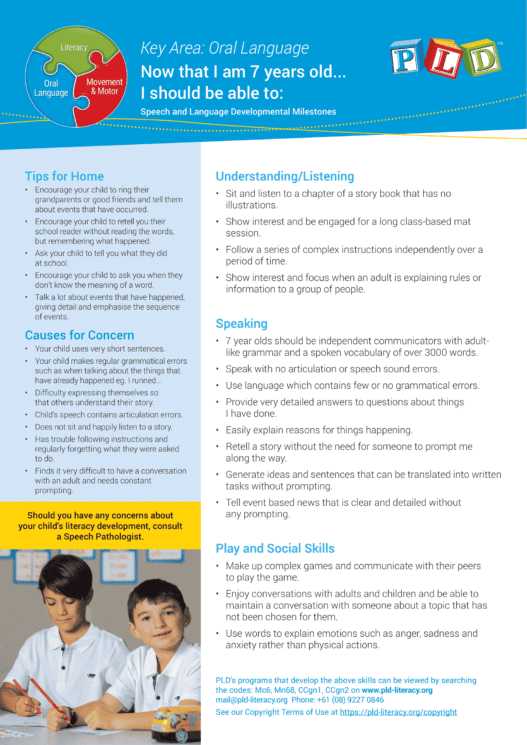
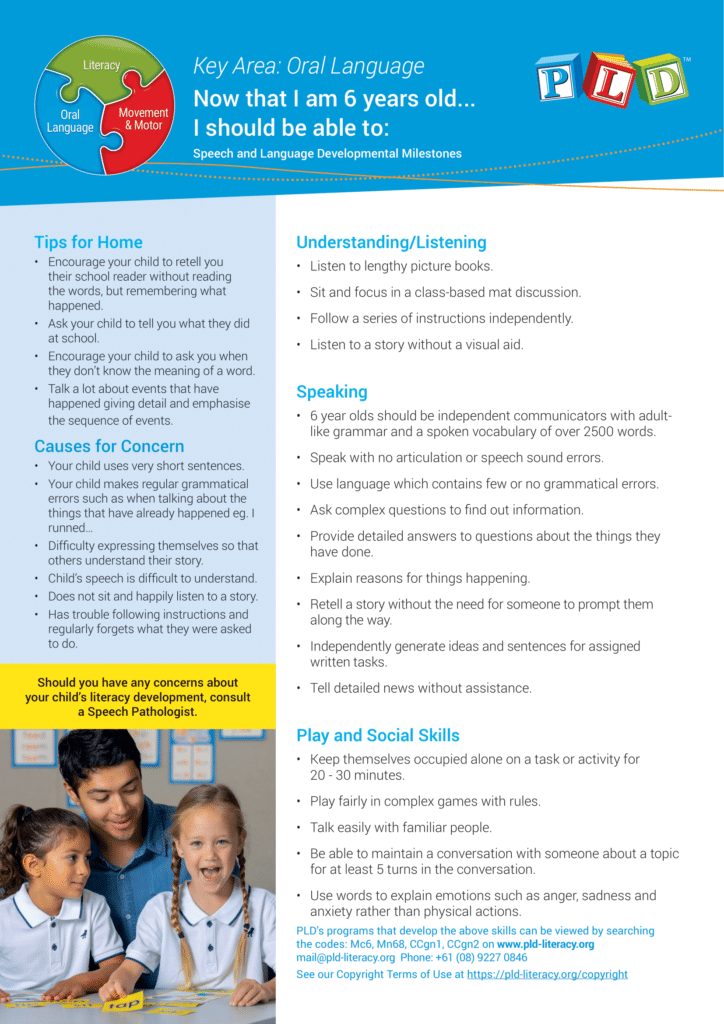
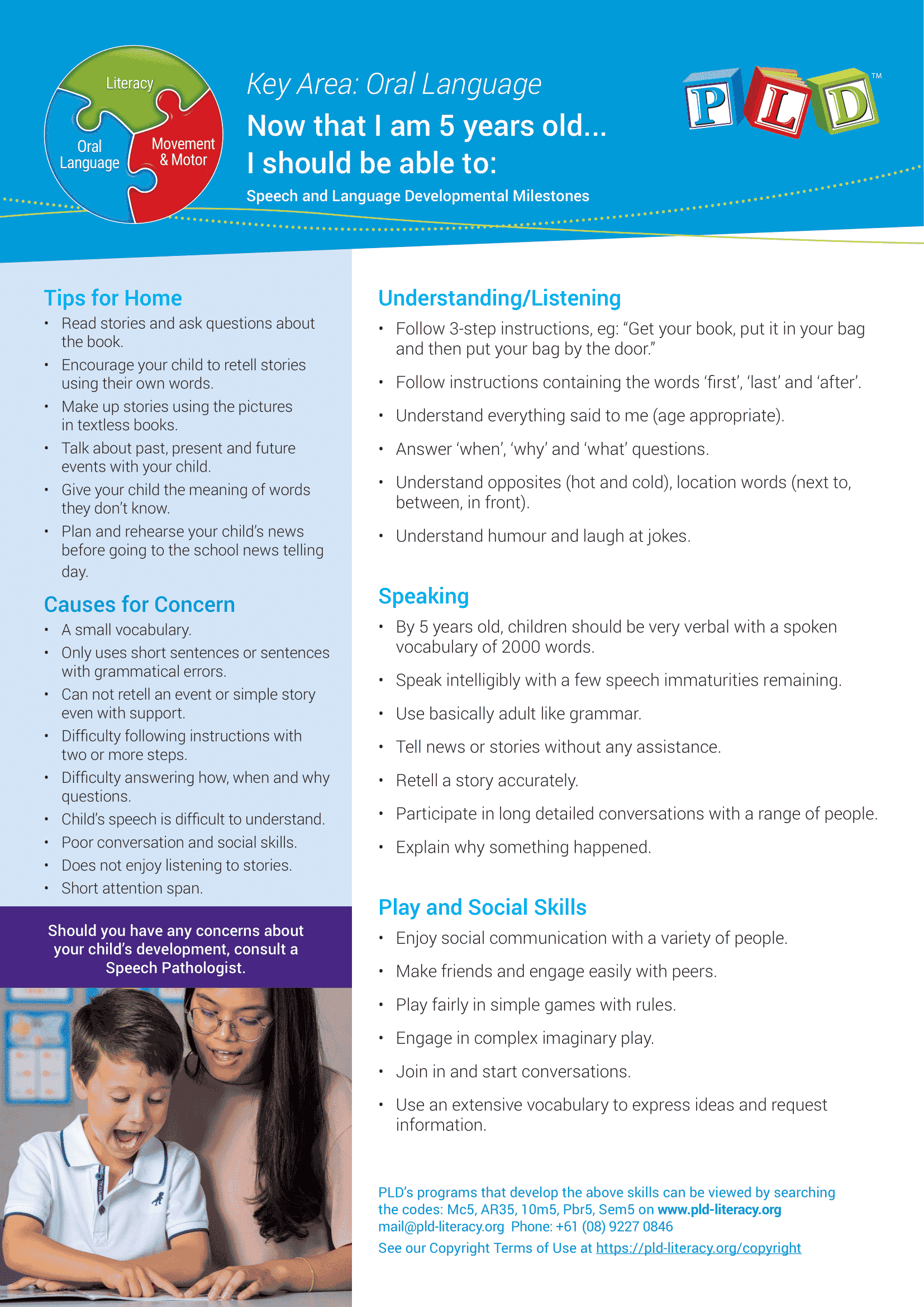
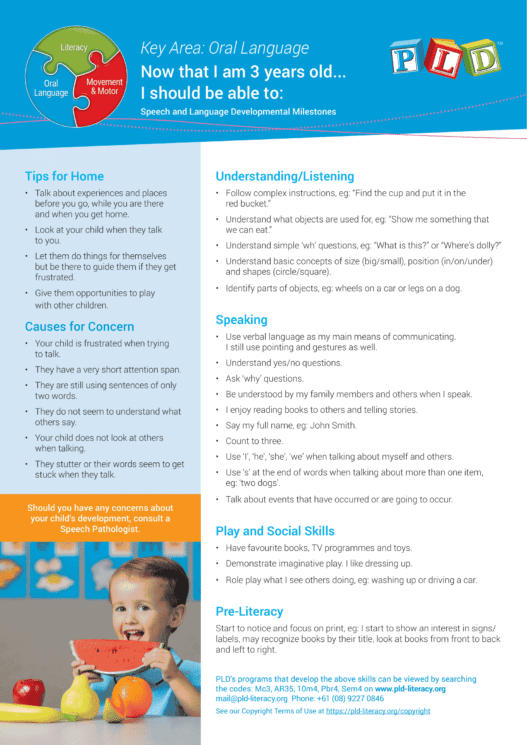
-
School Leaders - How to Sustain a Successful School Wide Implementation of PLD
This manual is designed to be a companion resource used in conjunction with the school leaders online course, Teaching Sequences, Screening & Tracking Manuals and other PLD teacher resources. Both […]
This manual is designed to be a companion resource used in conjunction with the school leaders online course, Teaching Sequences, Screening & Tracking Manuals and
-
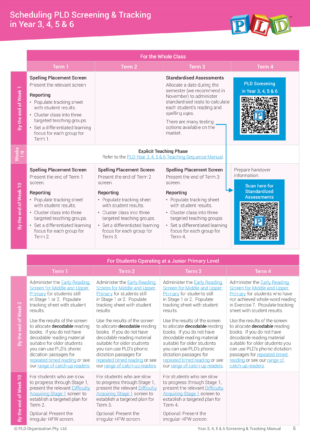
Year 3, 4, 5 & 6 Screening & Tracking Manual
The Year 3, 4, 5 & 6 Screening & Tracking Manual outlines step-by-step instructions including what and when to screen, the materials required, time allocations and discontinue rules. We recommended […]
The Year 3, 4, 5 & 6 Screening & Tracking Manual outlines step-by-step instructions including what and when to screen, the materials required, time allocations
-
Year 1 & 2 Screening & Tracking Manual
The Year 1 & 2 Screening & Tracking Manual outlines step-by-step instructions including what and when to screen, the materials required, time allocations and discontinue rules. We recommended that the screens […]
The Year 1 & 2 Screening & Tracking Manual outlines step-by-step instructions including what and when to screen, the materials required, time allocations and discontinue
-
Foundation Screening & Tracking Manual
The Foundation Screening & Tracking Manual outlines step-by-step instructions including what and when to screen, the materials required, time allocations and discontinue rules. We recommended that the screens are administered following […]
The Foundation Screening & Tracking Manual outlines step-by-step instructions including what and when to screen, the materials required, time allocations and discontinue rules. We recommended that
-
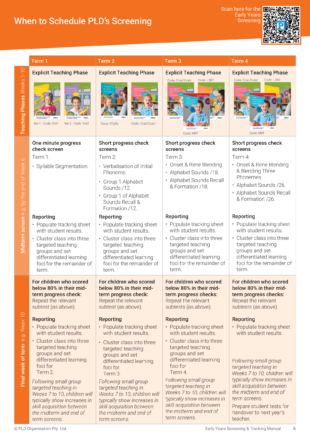
Early Years Screening & Tracking Manual
The Early Years Screening & Tracking Manual outlines step-by-step instructions including what and when to screen, the materials required, time allocations and discontinue rules. We recommended that the screens are administered […]
The Early Years Screening & Tracking Manual outlines step-by-step instructions including what and when to screen, the materials required, time allocations and discontinue rules. We recommended
-
Early Years Assessment Schedule
The following Early Years full year assessment schedule and scope and sequence have been extracted from the Early Years Screening & Tracking Manual. Within this download, outlines have been provided […]
The following Early Years full year assessment schedule and scope and sequence have been extracted from the Early Years Screening & Tracking Manual. Within this
-
Year 3, 4, 5 & 6 Assessment Schedule
-
Year 1 & 2 Assessment Schedule
The following Year 1 & 2 full year assessment schedule and scope and sequence have been extracted from the Year 1 & 2 Screening & Tracking Manual. Within this download, […]
The following Year 1 & 2 full year assessment schedule and scope and sequence have been extracted from the Year 1 & 2 Screening &
-
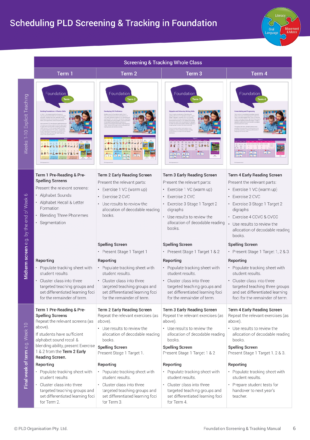
Foundation Assessment Schedule
The following Foundation full year assessment schedule and scope and sequence have been extracted from the Foundation Screening & Tracking Manual. Within this download, outlines have been provided as a […]
The following Foundation full year assessment schedule and scope and sequence have been extracted from the Foundation Screening & Tracking Manual. Within this download, outlines
-
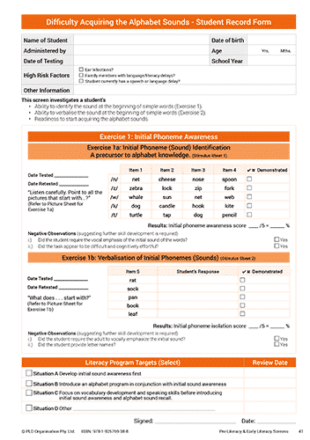
Difficulty Acquiring the Alphabet Sounds - Screen
-
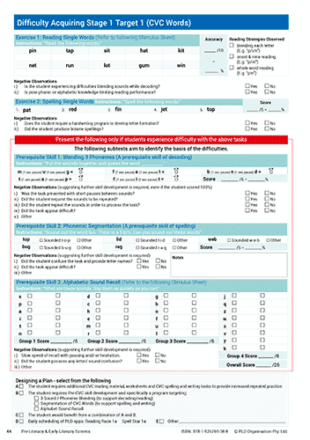
Assessments for Students Experiencing Difficulty Within Stage 1 Targets 1, 2 & 3
PLD recommends the presentation of these short assessments to determine why students may not be progressing through Stage 1 at a pleasing rate.
These screens have been designed to identify why students are not progressing, or why they are experiencing difficulties acquiring skills within Stage 1. The screens
-
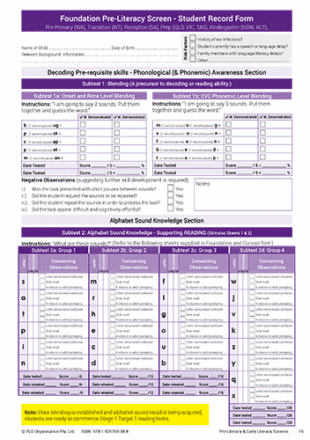
Foundation Pre-Literacy Screen
-
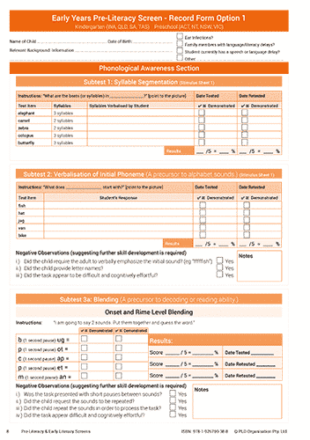
Early Years Pre-Literacy Screening
The Pre-Literacy Screens have been designed to profile the acquisition of core literacy precursor skills that will impact later reading, spelling and phonic development.
The screen focuses on two main skills: 1. Phonological Awareness: the ability to attend to the phonological structure or sound structure of words. 2. Alphabetic
-
Middle and Upper Primary Early Reading Screen
-
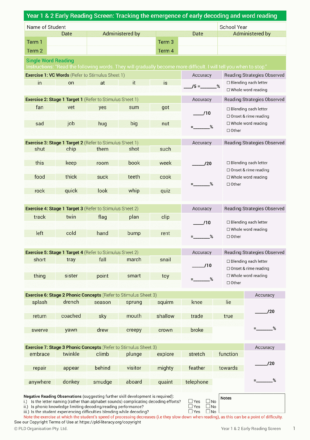
Year 1 & 2 Early Reading Screen
-
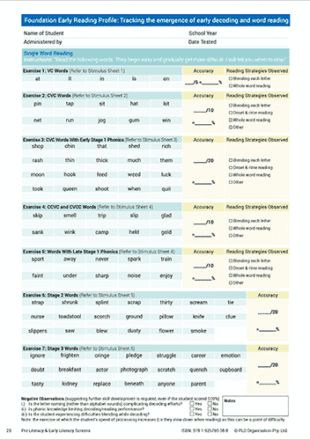
Early Reading Screen - Foundation
-
8-9 Year Old Comprehension Questions Progress Check